Social Science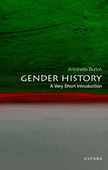
Antoinette Burton argues that gender history is hiding in plain sight, at work everywhere we look.
This volume introduces the field of gender history--its origins, development, reception, recalibrations, and frictions. It offers a set of working definitions of gender as a descriptive category and as a category of historical analysis, tracing the emergence, usage, and applicability of these entwined subjects across a range of times and places since the 1970s. Inevitably political, gender history has taken aim at the broader field of historical narrative by asking who counts as a historical subject, what difference gender makes, and how attention to it subverts reigning assumptions of what power, culture, economics, and identity have been in the past--and what they are today. The book explores how gender analysis has changed interpretations of the histories of slavery, capitalism, migration, and empire. As a field, gender history has been extraordinarily influential in shaping several generations of scholars and students. The fact that its early emphasis on the relationship between masculinity and femininity was part of a larger set of challenges to universal history by poststructuralism, postmodernism, and postcolonialism positions it at the heart of some of the most fractious intellectual debates of the late twentieth and early twenty-first centuries. And, as part of the movement toward gender equality that is key to modern western progress, gender history has been caught up in the culture wars that continue to shape post-global society. What is intriguing and ultimately defining about gender history is the way that the centrality of gender, so important for revealing how identity is structured in and through regimes of power, has been unable to hold its own over the half century of the field's own history. The practice of gender history has always run up against the forces of race, class, and sexuality that challenge the singularity of gender itself as an explanatory category of historical analysis. That powerful, unruly tension is at the heart of this Very Short Introduction.
Paperback
$12.08List price:$12.99
You save $0.91 (7%)Ships in 1 to 2 business days
StandardArrives 4 to 10 days after it ships.ExpeditedArrives 2 to 5 days after it ships.We email you a tracking number when your order ships.
Customers rate DiscountMags 4.7/5 3,645 reviews on independent sites SmartCustomer, ResellerRatings and Trustpilot
30-day returns
Return it within 30 days of delivery for a refund of the price plus tax. It must be in its original condition, and shrink-wrapped items unopened. Return shipping (with tracking) is on you, and original shipping isn't refunded. Arrived damaged or wrong? Contact us first and we'll make it right.
Family-ownedSelling since 2002
About this book
This volume introduces the field of gender history--its origins, development, reception, recalibrations, and frictions. It offers a set of working definitions of gender as a descriptive category and as a category of historical analysis, tracing the emergence, usage, and applicability of these entwined subjects across a range of times and places since the 1970s. Inevitably political, gender history has taken aim at the broader field of historical narrative by asking who counts as a historical subject, what difference gender makes, and how attention to it subverts reigning assumptions of what power, culture, economics, and identity have been in the past--and what they are today. The book explores how gender analysis has changed interpretations of the histories of slavery, capitalism, migration, and empire. As a field, gender history has been extraordinarily influential in shaping several generations of scholars and students. The fact that its early emphasis on the relationship between masculinity and femininity was part of a larger set of challenges to universal history by poststructuralism, postmodernism, and postcolonialism positions it at the heart of some of the most fractious intellectual debates of the late twentieth and early twenty-first centuries. And, as part of the movement toward gender equality that is key to modern western progress, gender history has been caught up in the culture wars that continue to shape post-global society. What is intriguing and ultimately defining about gender history is the way that the centrality of gender, so important for revealing how identity is structured in and through regimes of power, has been unable to hold its own over the half century of the field's own history. The practice of gender history has always run up against the forces of race, class, and sexuality that challenge the singularity of gender itself as an explanatory category of historical analysis. That powerful, unruly tension is at the heart of this Very Short Introduction.
Product details
- Format
- Paperback
- Publisher
- Oxford University Press
- Published
- July 1, 2024
- Pages
- 144
- Language
- English
- ISBN-13
- 9780197587010
- ISBN-10
- 0197587011
- Dimensions
- 6.5 × 4.2 × 0.4 in
- Weight
- 0.25 lb
Subjects
Paperback$12.08$12.99